Skip to content

World’s Top 10 Heritage Sites: A Journey Through Time

Heritage sites serve as gateways to the past, offering a glimpse into the ancient civilizations, natural wonders, and cultural influences that have shaped the world. These remarkable locations, recognized for their historical significance, architectural marvels, and cultural impact, span continents and eras, telling stories of human achievement and natural beauty. From the architectural feats of ancient builders to the spiritual sanctuaries that have drawn pilgrims for centuries, this journey through the world’s top 10 heritage sites promises to enlighten and inspire. Each site, with its unique narrative and contribution to collective history, invites you to explore the depths of human creativity and resilience.

The Great Pyramid of Giza, Egypt

World's Top 10 Heritage Sites: A Journey Through Time

The Great Pyramid of Giza, standing as the last of the Seven Wonders of the Ancient World, encapsulates the pinnacle of ancient Egyptian engineering and architectural skill. Constructed over 4,500 years ago, this monumental tomb was erected for Pharaoh Khufu, showcasing the advanced understanding of mathematics and astronomy of its time. Its precise alignment with the stars and the sheer scale of its construction continues to awe scholars and visitors alike. The Great Pyramid is not only a testament to the ingenuity of ancient Egypt but also a lasting symbol of humanity’s quest to achieve the extraordinary.

Despite centuries of study, the methods used in its construction remain a topic of debate and fascination, underscoring the pyramid’s significance in the fields of archaeology and engineering. Beyond its architectural grandeur, the pyramid and its surrounding complex offer insights into the religious and social practices of the ancient Egyptians. It draws millions of visitors each year, who come to marvel at its ancient beauty and ponder the mysteries that it still guards. The Great Pyramid of Giza remains an enduring legacy of Egypt’s magnificent past, inviting exploration and admiration.

Machu Picchu, Peru

World's Top 10 Heritage Sites: A Journey Through Time

Perched high in the Andes Mountains, Machu Picchu stands as an enduring testament to the ingenuity and spirit of the Inca civilization. This ancient citadel, rediscovered by Hiram Bingham in 1911, was believed to be a royal estate or sacred religious site. Its intricate stone constructions blend seamlessly with the natural landscape, creating a harmonious balance between human craftsmanship and the environment. Machu Picchu’s isolation and the mystery surrounding its original purpose add to the allure that attracts scholars and tourists from around the globe.

The site’s architectural prowess is evident in its terraced fields, sophisticated drainage systems, and astronomical alignments, highlighting the Incas’ deep understanding of agriculture, architecture, and astronomy. The Intihuatana stone, thought to function as an astronomical clock or calendar, exemplifies the civilization’s advanced knowledge. Machu Picchu serves as a window into Incan society and a symbol of resilience, surviving centuries of exposure to harsh mountain conditions. It continues to inspire awe and wonder, cementing its place as a jewel of historical and cultural heritage.

The Colosseum, Italy
World's Top 10 Heritage Sites: A Journey Through Time

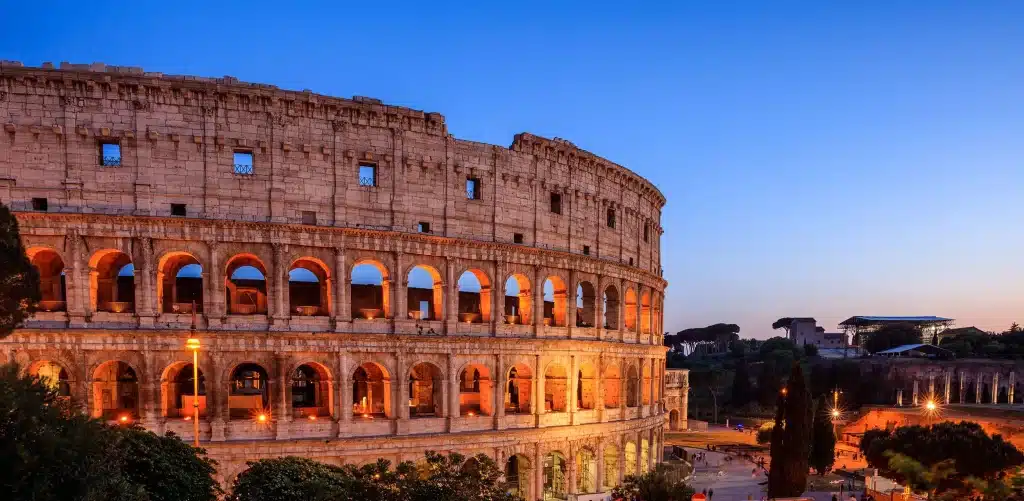
The Colosseum in Rome, an iconic symbol of the Roman Empire’s might and architectural innovation, has captivated the imagination of the world for nearly two millennia. Constructed between AD 70 and 80, this amphitheater could hold upwards of 50,000 spectators, who gathered to watch gladiatorial contests, public spectacles, and mock sea battles. Its ingenious design, including the use of concrete and the intricate system of vaults and arches, allowed for the rapid movement of crowds and has influenced stadium construction throughout history. Today, the Colosseum stands as a monument to Roman engineering and a reminder of the cultural and political power of ancient Rome.

Despite the passage of time and the damage inflicted by earthquakes and stone robbers, the Colosseum retains its majesty and grandeur. It serves as a poignant symbol of the transitory nature of human endeavors while simultaneously celebrating the enduring legacy of Roman architectural and engineering practices. Visitors to the Colosseum can still feel the echoes of ancient Rome as they walk through the same entrances once used by spectators eager to witness the spectacles within. The Colosseum embodies the height of Roman architectural achievement and the complexity of its society.

Petra, Jordan

World's Top 10 Heritage Sites: A Journey Through Time

Petra, the rose-red city half as old as time, carved directly into the vibrant sandstone cliffs of southern Jordan, stands as a testament to the ingenuity of the Nabateans. This ancient trading hub, flourishing around the 1st century AD, linked the silk and spice routes from the East to the West. The city’s most famous structure, the Treasury (Al-Khazneh), greets visitors with its breathtaking façade, believed to be the mausoleum of Nabatean King Aretas IV. Petra’s intricate water conduit system, which supported its population through harsh desert conditions, showcases the advanced engineering skills of its inhabitants.

Beyond the Treasury, Petra sprawls over a vast area filled with tombs, temples, and an ancient theater, all carved from the dusky pink stone that glows at sunset. This UNESCO World Heritage site, rediscovered by Swiss explorer Johann Ludwig Burckhardt in 1812, has since captured the world’s imagination, appearing in numerous films and literature. Petra’s enduring beauty and the mystery of its decline continue to attract researchers and tourists alike, eager to uncover and experience the secrets held within its walls. The city remains a symbol of cultural resilience and architectural mastery, echoing the grandeur of a civilization lost to time.

The Great Wall of China

World's Top 10 Heritage Sites: A Journey Through Time

Spanning thousands of miles across northern China, the Great Wall stands as a monumental feat of engineering and a testament to the determination of the Chinese people to protect their lands from invasion. Constructed by various dynasties over centuries, the wall weaves through mountains, deserts, and plains, showcasing China’s vast landscape as much as its people’s resilience. Its construction began as early as the 7th century BC, with the most famous sections built during the Ming Dynasty. The Great Wall not only served as a formidable barrier against invasions but also facilitated trade and communication, playing a crucial role in the development and protection of Chinese civilization.

Despite the passage of time, the Great Wall continues to be a symbol of national pride and an embodiment of China’s historical significance. It draws visitors from around the world, who trek along its length to witness firsthand the ingenuity of ancient construction techniques and the breathtaking views it offers. The wall’s architectural grandeur and historical depth provide a tangible link to China’s past, offering insights into the strategic importance of defense and the immense labor invested in its construction. As one of the most recognizable symbols of China’s cultural heritage, the Great Wall stands as a monument to human perseverance and creativity.

Taj Mahal, India

World's Top 10 Heritage Sites: A Journey Through Time

The Taj Mahal, an ivory-white marble mausoleum on the banks of the Yamuna river in Agra, India, represents the zenith of Mughal architecture and a universally admired masterpiece of world heritage. Commissioned in 1632 by Emperor Shah Jahan in memory of his wife Mumtaz Mahal, this symbol of love merges elements from Islamic, Persian, Ottoman Turkish, and Indian architectural styles. The complex includes a mosque and a guest house, surrounded by gardens laid out in the charbagh structure, a quadrilateral garden design based on the four gardens of Paradise mentioned in the Quran. The Taj Mahal’s beauty is unmatched, its intricate inlay work and detailed sculpture making it a monument as much to romantic love as to architectural innovation.

Yearly, millions of people from across the globe visit the Taj Mahal, drawn by its legendary beauty and the romantic story behind its construction. The mausoleum’s reflective tile work changes color depending on the time of day, symbolizing the changing moods of the emperor’s wife. This UNESCO World Heritage site is not just a popular tourist attraction but also an enduring symbol of India’s rich history and cultural diversity. The Taj Mahal continues to captivate with its elegance and the detailed craftsmanship, preserving the legacy of the Mughal Empire and serving as a timeless testament to the intricacies of human emotion and artistic expression.

Angkor Wat, Cambodia

World's Top 10 Heritage Sites: A Journey Through Time

Angkor Wat, the largest religious monument in the world, sits majestically in the heart of the ancient city of Angkor, a testament to the sophistication of the Khmer Empire. Built in the early 12th century by King Suryavarman II, it was initially conceived as a Hindu temple dedicated to the god Vishnu. Over time, it gradually transformed into a Buddhist temple, reflecting the region’s religious fluidity. The temple’s design symbolizes the Hindu cosmology, with the central tower representing Mount Meru, the home of the gods, surrounded by moats and concentric galleries that mimic the ocean and mountain ranges that encircle the cosmic center. The extensive bas-reliefs and stone carvings throughout the complex depict various Hindu myths and historical events, showcasing the artisans’ skill and the cultural richness of the empire.

Today, Angkor Wat is a symbol of Cambodia’s national pride and a major archaeological site that attracts scholars and tourists from around the world. Its preservation challenges highlight the importance of international collaboration in safeguarding global heritage. The temple’s grand scale and architectural beauty, set against the backdrop of lush Cambodian jungle, offer an unparalleled glimpse into the past. As visitors walk through the vast galleries and ascend the central tower, they are transported to a time when Angkor was a thriving metropolis, reinforcing the temple’s role as a bridge between the past and present.

Chichen Itza, Mexico

World's Top 10 Heritage Sites: A Journey Through Time

Chichen Itza, one of the largest Mayan cities, is a fascinating testament to the astronomical precision and architectural genius of the Mayan civilization. Located in the Yucatan Peninsula of Mexico, this ancient city thrived from around 600 AD to the 1200s and is home to a variety of structures that reflect the Maya’s sophisticated understanding of astronomy, mathematics, and acoustics. The most iconic structure, El Castillo, or the Temple of Kukulcan, serves as a calendar of stone. During the equinoxes, the play of light and shadow creates the illusion of a serpent descending the pyramid’s steps, a phenomenon that attracts thousands of visitors each year. The site also features the Great Ball Court, the largest of its kind in the Americas, where players engaged in a ritual game with religious significance.

Chichen Itza’s importance extends beyond its architectural wonders; it represents a cultural and spiritual center where the Maya viewed the cosmos and their place within it. The city’s layout and the orientation of its buildings in relation to celestial bodies underscore the Maya’s deep connection to the natural world and their attempt to harmonize their architectural achievements with their spiritual beliefs. Today, Chichen Itza is a UNESCO World Heritage site and one of the New Seven Wonders of the World, reflecting its significance as a cultural and historical monument. It continues to offer valuable insights into the Maya civilization, drawing researchers and tourists alike to explore its mysteries and marvel at the legacy of a people whose achievements continue to resonate through time.

Alhambra, Spain

World's Top 10 Heritage Sites: A Journey Through Time

Nestled atop the rolling hills of Granada, Spain, the Alhambra stands as a splendid example of Moorish art and architecture, reflecting the cultural richness and historical complexity of the region. Originally constructed as a small fortress in 889 AD, it was rebuilt in the mid-13th century by the Nasrid emir Mohammed ben Al-Ahmar and later transformed into a royal palace by Yusuf I, Sultan of Granada. The Alhambra’s intricate Islamic art, detailed stucco work, and reflective pools showcase the sophistication of Moorish design and craftsmanship. Its harmonious blend of architectural elements with the natural landscape exemplifies the Islamic concept of paradise on earth, making it a mesmerizing sight that captivates all who visit.

The Alhambra serves as a testament not only to the artistic and scientific achievements of the Islamic Golden Age but also as a symbol of the historical confluence of cultures in Spain. Its preservation as a UNESCO World Heritage site allows for continued study and appreciation of Islamic architecture and the cultural dialogue it represents. Walking through the Alhambra’s courtyards and palaces, visitors are enveloped in an atmosphere of historical reverence, beauty, and tranquility. The site remains a poignant reminder of the complex layers of history that have shaped Spain and the enduring legacy of Muslim, Christian, and Jewish coexistence in Andalusia.

Acropolis of Athens, Greece

World's Top 10 Heritage Sites: A Journey Through Time

The Acropolis of Athens, an ancient citadel perched above the city, stands as a beacon of classical civilization and architectural excellence. Dominated by the Parthenon and dedicated to the goddess Athena, the Acropolis embodies the height of Athenian democracy and artistic achievement in the 5th century BC. This UNESCO World Heritage site includes other significant structures, such as the Erechtheion, the Temple of Athena Nike, and the Propylaea, each contributing to the Acropolis’s status as a symbol of the power, culture, and intellectual prowess of ancient Athens. The architectural mastery and historical significance of the Acropolis have made it one of the most studied and visited ancient sites in the world, drawing millions who seek to connect with the roots of Western civilization.

Beyond its architectural grandeur, the Acropolis serves as a lasting symbol of the ideals and values that shaped the Western world, including democracy, philosophy, and the arts. Efforts to preserve and restore the Acropolis reveal the global importance of protecting cultural heritage as a means of understanding history and humanity. As visitors ascend the sacred rock, they are transported back to ancient times, where the ideals of beauty, harmony, and balance were realized in stone. The Acropolis remains a powerful testament to human creativity and the enduring desire to reach beyond the ordinary, inspiring future generations to appreciate the profound legacy of ancient Greece.

Discover Heritage, Inspire the Future

Embarking on a journey through the world’s top heritage sites reveals the depth of human creativity, resilience, and cultural diversity. These monuments, each with its unique story and significance, offer invaluable insights into the world’s collective past and present. They are a reminder of the importance of preserving global heritage for future generations to learn from and enjoy. As you continue to explore and appreciate these wonders, may you be inspired to not only connect with the past but also contribute towards safeguarding the world’s diverse cultural heritage.