Lake Hillier, Australia
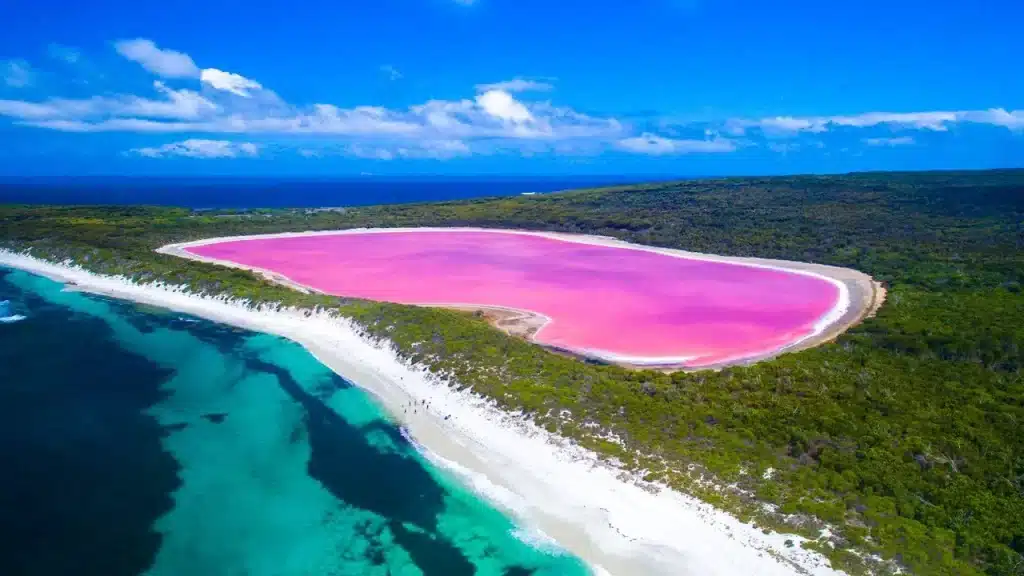
Off the coast of Western Australia, Lake Hillier astonishes visitors with its vibrant pink hue, a stark contrast to the deep blue of the surrounding ocean. This bubblegum-colored lake, located on Middle Island, the largest of the Recherche Archipelago, has baffled scientists for years. The pink color is due to the presence of Dunaliella salina microalgae, which thrive in the lake’s high-salt content. This unique phenomenon is best viewed from above, as scenic flights offer the most spectacular views of the lake in its entirety.
Lake Hillier is not only a visual marvel but also a symbol of nature’s mysteries. Efforts to protect the delicate ecosystem around the lake are in place, restricting direct access to ensure its preservation. The nearby town of Esperance serves as a base for visitors, offering a glimpse into Australia’s rugged southern coastline. In addition to Lake Hillier, the region is home to pristine beaches and a rich biodiversity, including rare bird species and wildflowers, especially in spring.
Socotra Island, Yemen

Socotra Island, often described as the most alien-looking place on Earth, is an archipelago in the Arabian Sea. Its isolation from the mainland has resulted in a unique and bizarre landscape, characterized by its dragon’s blood trees with umbrella-shaped canopies and the desert rose plants that resemble elephants’ legs. This UNESCO World Heritage Site boasts a third of its plant life found nowhere else on the planet, making it a hotspot for biodiversity.
The cultural heritage of Socotra is as intriguing as its natural wonders. The island’s small population has maintained a distinct culture with its own language and customs. Travel to Socotra requires careful planning due to its remote location and limited accessibility. The island’s untouched beauty, combined with its rich biodiversity, underscores the importance of conservation efforts to protect this unique ecosystem from the growing pressures of tourism and climate change.
The Door to Hell, Turkmenistan
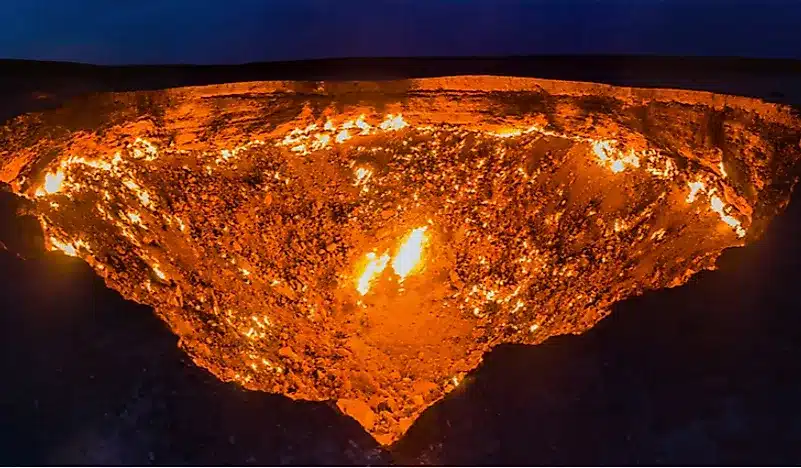
In the heart of the Karakum Desert in Turkmenistan lies a fiery spectacle known as the Door to Hell. This massive, burning natural gas crater, officially known as the Darvaza gas crater, was created in 1971 when a Soviet drilling rig accidentally punctured a massive underground natural gas cavern, causing the ground to collapse and the gas to escape. To prevent the spread of methane gas, it was set alight, and it has been burning continuously ever since, illuminating the night sky with its eerie glow.
The sight of the Door to Hell is both intimidating and mesmerizing, with flames and boiling mud inside a crater over 60 meters wide and 20 meters deep. Visitors to the site are advised to exercise caution, as the heat and unstable ground near the crater pose risks. Despite the environmental concerns it raises, this accidental landmark offers a unique and surreal experience, especially captivating at night when its fiery glow is most visible.
Waitomo Glowworm Caves, New Zealand

In the heart of New Zealand’s North Island, the Waitomo Glowworm Caves offer an otherworldly experience. The main attraction of these caves is the Arachnocampa luminosa, a species of glowworm endemic to New Zealand. These tiny creatures emit a luminescent light, creating a starry effect on the cave ceilings. Visitors can explore these ancient caves through guided boat tours, silently gliding under the mesmerizing glowworm-lit canopy.
The history of the caves is as fascinating as their natural beauty. Formed over 30 million years ago, these limestone caverns have been shaped by water and time, creating impressive stalactites and stalagmites. A visit to the Waitomo Glowworm Caves can be combined with other attractions in the region, like the rolling hills of the Waikato region or the nearby Hobbiton Movie Set, making it a must-see destination for those exploring New Zealand’s North Island.
The Bottom Line
These extraordinary locations offer more than just visual splendor; they provide a window into the diverse and magnificent natural world. They remind visitors of the planet’s fragility and the need for conservation and responsible tourism. Each site, with its unique story, geological history, or ecological significance, contributes to a deeper appreciation of Earth’s wonders. The journey to these places is not just about witnessing their beauty but also understanding and respecting the delicate balance of nature that makes such wonders possible.


