

Deadly Parasites Lurking in Popular Swimming Spots
From brain-eating amoebas to chlorine-resistant parasites, waterborne threats pose serious risks to swimmers in lakes, rivers, and even treated pools.
The Brain-Eating Amoeba: Naegleria Fowleri in Freshwater Bodies

Perhaps no waterborne parasite strikes more fear into swimmers than Naegleria fowleri, commonly known as the brain-eating amoeba. This microscopic organism thrives in warm freshwater environments and poses one of the most terrifying health risks associated with recreational swimming. The amoeba enters the human body through the nose, typically when water is forced upward during diving, jumping, or submerging in warm freshwater lakes, rivers, or hot springs. Once inside, the parasite travels through the nasal cavity to the brain, where it causes a devastating condition called primary amebic meningoencephalitis.
The disease progression is both rapid and devastating. Symptoms often mimic bacterial meningitis, including severe headaches, fever, nausea, vomiting, stiff neck, confusion, and seizures, making initial diagnosis challenging. By the time the true cause is identified, it is often too late for effective intervention. Medical professionals have noted that early diagnosis and treatment are critical for patient survival, yet the overwhelming inflammation of the central nervous system and lack of effective treatment options contribute to the extremely high mortality rate.
A total of 157 Naegleria fowleri infections were reported in the United States from 1962 to 2022, with no more than eight new cases occurring in a single year. The estimated annual case count ranges between zero and eight, with most cases occurring in southern states such as Florida and Texas, predominantly affecting young males. However, some cases have occurred in northern states during periods of extremely hot weather.
In August 2026, a central North Carolina teenager became critically ill with a Naegleria fowleri infection, prompting renewed public health warnings about the dangers lurking in warm freshwater bodies. Health officials emphasized that while the risk of drowning remains far higher than contracting a Naegleria infection, the amoeba is present in waters across the United States, and swimmers should take precautions every time they enter a lake or other freshwater environment.
Pool and Water Park HazardsCryptosporidium: The Chlorine-Resistant Parasite Spreading in Treated Water

While many swimmers assume that chlorinated pools offer complete protection from parasitic infections, Cryptosporidium presents a troubling exception to this belief. This microscopic parasite has emerged as the leading cause of waterborne disease among people in the United States, and its ability to survive standard pool disinfection makes it particularly dangerous in recreational water facilities. Health officials warn that the parasite is resistant to bleach and can survive in chlorinated pools for several days, rendering standard water treatment insufficient against this pathogen.
The summer of 2026 witnessed significant outbreaks linked to Cryptosporidium. The U.S. Centers for Disease Control and Prevention reported more than 843 confirmed cases and over 1,500 possible cases of cyclosporiasis across 31 states, with at least 86 people hospitalized. While the outbreak was primarily linked to contaminated produce, health officials also identified swimming pools and splash pads as transmission sites where the parasite spreads through ingested water.
In October 2026, public health officials in King County, Washington confirmed that 14 people were sickened by cryptosporidiosis linked to a hotel swimming pool at McMenamins Anderson School in Bothell. Laboratory tests confirmed Cryptosporidium as the cause. Investigators suspect the parasite spread when an infected swimmer entered the pool. Notably, the facility was well-maintained, followed all county health and safety regulations, and had no violations during inspection—demonstrating that even properly maintained pools can harbor this resistant parasite.
Symptoms of cryptosporidiosis include watery diarrhea, stomach cramps, nausea, vomiting, and fever, typically appearing days after exposure to contaminated water. While the infection is usually self-limited and does not require specific treatment in healthy individuals, people with compromised immune systems face significantly greater risks, as the infection can become prolonged and lead to serious dehydration. Outbreaks have been associated with common recreational water sites including splash pads, water sports areas, and lakes, particularly following heavy rainstorm events when runoff from livestock can contaminate waterways.
Gastrointestinal ThreatsGiardia and Intestinal Parasites Found in Lakes and Rivers
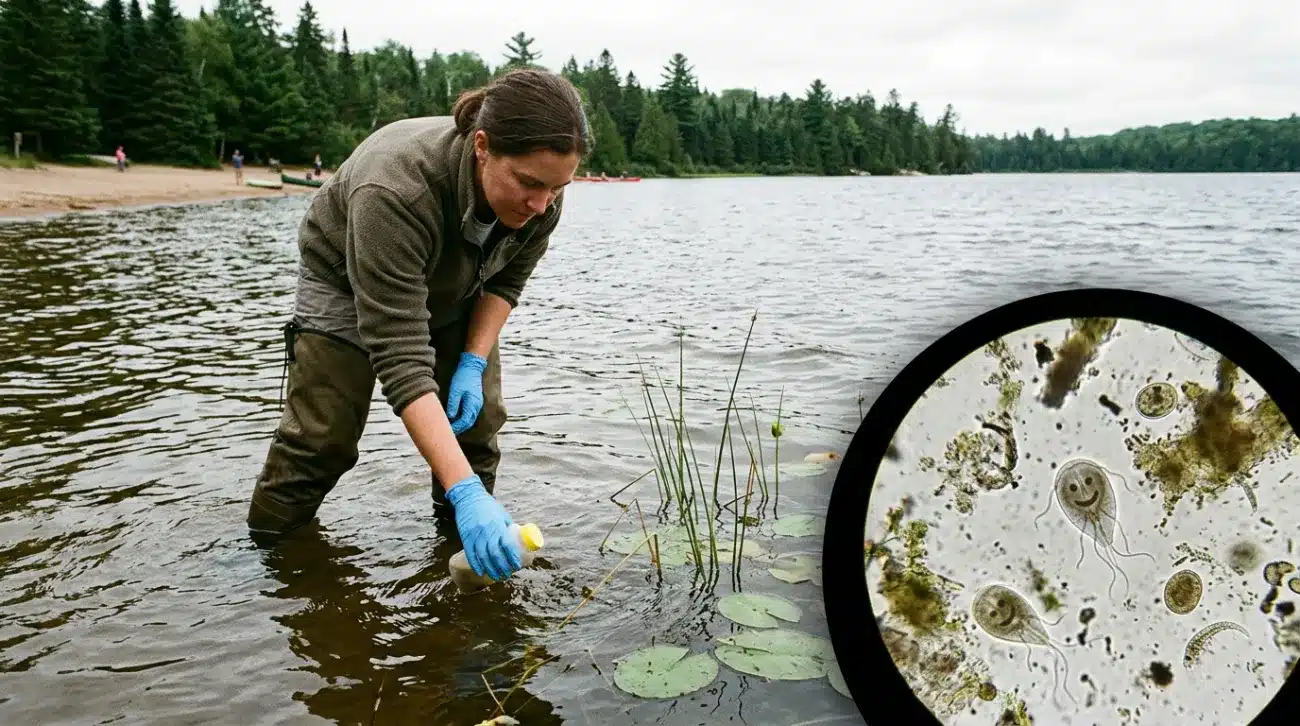
Giardia represents one of the most common parasitic threats facing recreational swimmers, particularly those who venture into natural bodies of water such as lakes, rivers, and streams. This microscopic parasite is found in the feces of infected animals and humans and causes a diarrheal illness called giardiasis. Swallowing contaminated water while swimming, diving, or accidentally ingesting even small amounts of lake water can lead to infection, with symptoms typically appearing one to three weeks after exposure.
The symptoms of giardiasis are notably unpleasant and can persist for weeks. Infected individuals commonly experience watery diarrhea, greasy stools that may float, stomach cramps, bloating, gas, nausea, loss of appetite, weight loss, and fatigue. Some people develop no symptoms at all but can still pass the parasite to others through their stool, creating a cycle of contamination in recreational waters. In otherwise healthy persons, symptoms generally last two to six weeks, though some individuals experience longer-lasting or recurring symptoms that can lead to dehydration and nutritional deficiencies.
Sources: CDC 2022 data; *Crypto cases include all transmission routes. Giardiasis cases reported in 2022. Naegleria cases represent typical annual range.
Natural water bodies including lakes, rivers, streams, and ponds can harbor Giardia cysts shed by wildlife, livestock, humans, and household pets. Unlike chlorinated pools, untreated freshwater offers little protection, and the hardy cysts can survive cold temperatures and persist under ice for extended periods. The parasite is so prevalent that it has been identified as the most frequently detected parasitic infection in some regions and remains a common cause of waterborne illness throughout the country.
Skin InfectionsSwimmer’s Itch and Cercarial Dermatitis From Contaminated Waters

While not as deadly as brain-eating amoebas, swimmer’s itch remains one of the most common afflictions affecting people who swim in freshwater lakes and ponds. This skin condition, medically known as cercarial dermatitis, is caused by parasitic flatworms from the family Schistosomatidae. The parasites complete their life cycle between waterfowl, mammals, and freshwater snails, but when the microscopic larvae encounter human swimmers, they mistakenly burrow into human skin, causing an allergic reaction that produces an intensely itchy rash with reddish pimples or blisters.
The condition appears as a skin rash caused by an allergic reaction to certain microscopic parasites that infect some birds and mammals. These parasites are released from infected snails into both fresh and salt water, though freshwater exposure is most common. Children younger than fifteen years face particular risk because they tend to play in shallow water areas where snails are more prevalent and are less likely to follow precautionary measures such as towel drying immediately after leaving the water.
Morning hours present the highest risk as cercariae emerge most rapidly from snails during this period. Shallow water carries more parasites than deep water. Areas rich in aquatic vegetation, waterfowl activity, and snail populations significantly increase infection risk.
A tingling sensation may occur as parasites penetrate the skin. Small reddish pimples appear within 12 hours. The rash typically lasts about one week and usually does not require medical attention, though scratching can cause secondary bacterial infections.
Towel dry or shower immediately after leaving the water. Avoid marshy areas where snails are commonly found. Do not attract birds by feeding them near swimming areas. Wearing protective clothing such as wetsuits provides the most effective barrier.
Most cases require no medical treatment. Over-the-counter anti-itch creams, calamine lotion, corticosteroid creams, cool compresses, colloidal oatmeal baths, and Epsom salts can help soothe symptoms. Prescription antihistamines may be needed for severe cases.
Unlike the other parasites discussed, swimmer’s itch is not contagious and cannot spread from person to person. The parasites cannot survive in the human body and die shortly after penetrating the skin. However, repeated exposure tends to cause faster and more severe reactions, as individuals become sensitized to the parasite over time. Well-maintained chlorinated swimming pools present no risk of swimmer’s itch, as the appropriate snails must be present for the condition to occur.


